
News
GPBF Announces New Grantee
Education for Sharing (E4S)
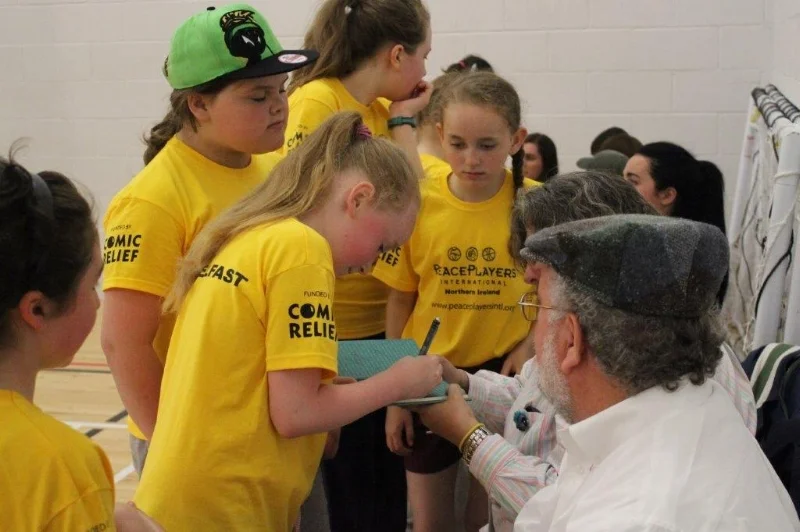
The Global Peace Building Foundation is pleased to announce Education for Sharing as one of our newest grant recipients.
Education for Sharing is an international nonprofit organization dedicated to empowering children and young people through play-based education that promotes empathy, collaboration, global citizenship, and peacebuilding. Through interactive programs, educational initiatives, and community engagement, the organization helps students develop critical social-emotional skills while fostering understanding and respect across cultures and communities.
By creating learning environments centered on cooperation, inclusion, and active participation, Education for Sharing equips young people with the tools to become compassionate leaders and positive changemakers in their schools, communities, and the wider world.
The Global Peace Building Foundation is honored to support organizations like Education for Sharing that are investing in the next generation of peacebuilders through education, empathy, and human connection.
GPBF Board responds to recent USAID cuts, issues emergency relief grants

Seeds of Peace
began by bringing together 46 Palestinians, Israelis, and Egyptians in 1993.
Now, three decades later, over 3,000 young leaders and several hundred educators from the Middle East have graduated from the Seeds of Peace Camp, including delegates from Iraq, Jordan, Kuwait, Morocco, Qatar, Saudi Arabia, Tunisia, and Yemen.
Seeds of Peace now works primarily with young Egyptian, Israeli, Jordanian, and Palestinian leaders. The program begins at our Camp, where Middle East campers discuss core elements of the conflict, including the origins of the Zionist movement, the Holocaust, the Nakba, the Occupation, fear of violence, and fear of others, as well as terrorism, racism, and other drivers of oppression.
The immersive nature of Camp allows camper to develop authentic relationships with one another by living, eating, playing, and learning together. Dialogue is paired with recreational activities, a dynamic group challenge program that fosters team-building and communications skills, as well as interfaith and intercultural activities. In this way, campers get to live together in a co-created community that values trust, respect, and empathy, and that allows them to explore the fullest sense of their identities.
Our programs continue with year-round local activities focused on the capacities leaders need most to be effective changemakers.
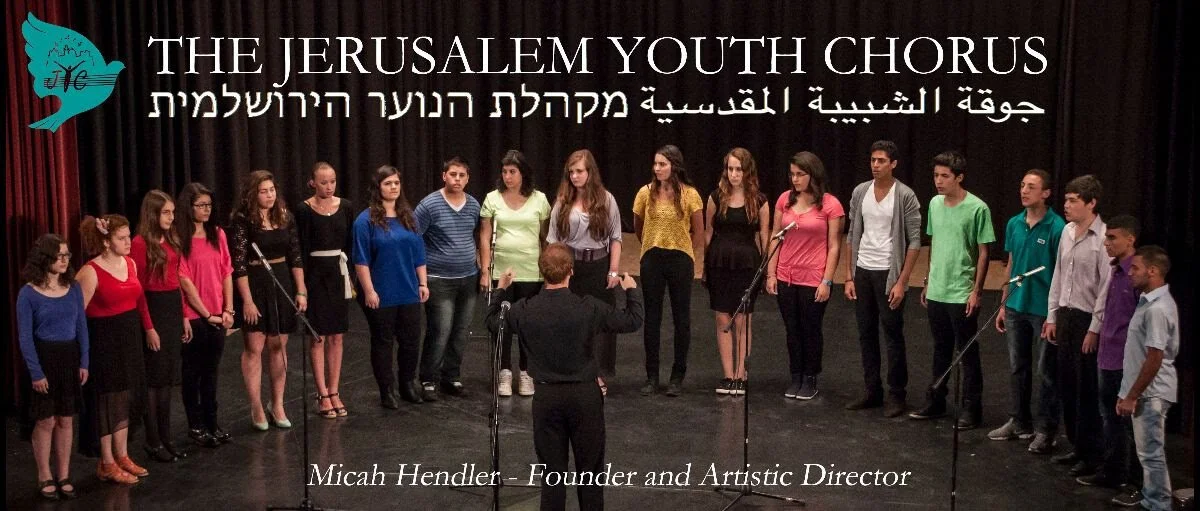
The Jerusalem Youth Chorus
is a choral and dialogue program for Palestinian and Israeli youth in Jerusalem. Our mission is to provide a space for these young people from East and West Jerusalem to grow together in song and dialogue. Through the co-creation of music and the sharing of stories, we empower youth in Jerusalem with the responsibility to speak and sing their truths, as they become leaders in their communities and inspire singers and listeners around the world to work for peace, justice, inclusion, and equality.
PeacePlayers Middle East
engages over 500 Palestinian and Israeli youth each year, ages 6-25, in year-round and multi-year basketball training, conflict resolution education and leadership development activities in Israel, with its head office in Tel Aviv – Jaffa.
Programs are divided into five tiers:
PEACEPLAYERS BASKETBALL CLUBS
A network of joint basketball clubs that bring together children and youth, ages 6-14, for basketball and peace educational activities
PEACEPLAYERS ALL STARS
Fully integrated competitive teams, composed of Arab and Jewish young women, ages 10-25, who play in the official Israeli basketball league
LEADERSHIP DEVELOPMENT PROGRAM
A leadership and capacity building program that grooms veteran participants into the coaches and leaders in the program and in their communities
RISING
STARS
A project that aims to scale PP-ME's programs by engaging promising leader-athletes from the wider community to create pipelines to untapped communities
ALUMNI ENGAGEMENT PROGRAM
An initiative that seeks to re-engage and re-connect PP-ME’s alumni, by supporting and inspiring them to further PP-ME’s mission
PeacePlayers International - Middle East, Seeds of Peace, and Jerusalem Youth Chorus each received special emergency grants to help cover the gap in funding caused by recent budget cuts to USAID.
The grant funds are being used to keep programming on pace to meet year-end goals, while each organization looks to strengthen existing funding and seek new sources of support.

GPBF Announces New Grantee:
Musicians without Borders
With much excitement, the Global Peacebuilding Foundation (GPBF) announces its newest grantee: Musicians without Borders (MwB). MwB will receive a $500 Precision Micro Grant℠ joining Dancing Classrooms Pittsburgh, PeacePlayers International, and Seeds of Peace in GPBF’s roster of grantees. Like the other grantees, MwB facilitates relationships across difference, helping young people overcome prejudice, stereotyping, hatred and fear.
Founded in 1999, MwB focuses on the power of music to build peace, connect people, empower musicians as social activists, and train local youth as changemakers. This particular grant will support inter-ethnic workshops in the Mitrovica Rock School (Mitrovica, Kosovo). Mitrovica is Europe's most divided city, with Serbs and Albanians living on different sides of the River Ibar ever since the end of the war in 1999. An entire post-war generation has grown up isolated and divided from ‘the other’.
Before the war, Mitrovica was a rock music city, a tradition of which both sides are still proud. The Mitrovica Rock School restores this rock music culture by providing a neutral platform for youth from both sides to meet as young musicians and aspiring rock stars. They provide daily lessons and band coaching sessions, all of which connect youth through weekly inter-ethnic workshops and its program for ethnically mixed bands. Over 900 youth have attended the Mitrovica Rock School since its launch in 2008.
Working in communities over the long-term, MwB has observed that participants in their programs experience less fear of the other, increased willingness to engage across difference, an increase in freedom of movement, and increased empathy.
MwB believes that “War divides. Music connects.” GPBF is proud to support MwB as they engage with the young people of Mitrovica to build peace and understanding.
GPBF ANNOUNCES NEW GRANTEE

We are very pleased to announce that the Global Peace Building Foundation recently issued a grant to The Jerusalem Youth Chorus (JYC), the newest addition to GPBF’s global grantee portfolio! JYC is currently operating amidst the on-going conflict in the region, bringing Israeli and Palestinian youth from East and West Jerusalem together, allowing music and dialogue to serve as a cultural bridge. In their programming, they allow space for dialogue, where common ground is sought, while also creating opportunities to better understand the “other” through the writing and performing of music. Their Founder and Artistic Director Micah Hendler, a 2004 Seeds of Peace Seed, was inspired by his experience at Seeds of Peace (another member of the GPBF Grantee Portfolio) to create the JYC. After completing his studies at Yale University, he founded the chorus in 2012. We are delighted to have them join our community!
GPBF announces new grantee
BREAKING GROUND
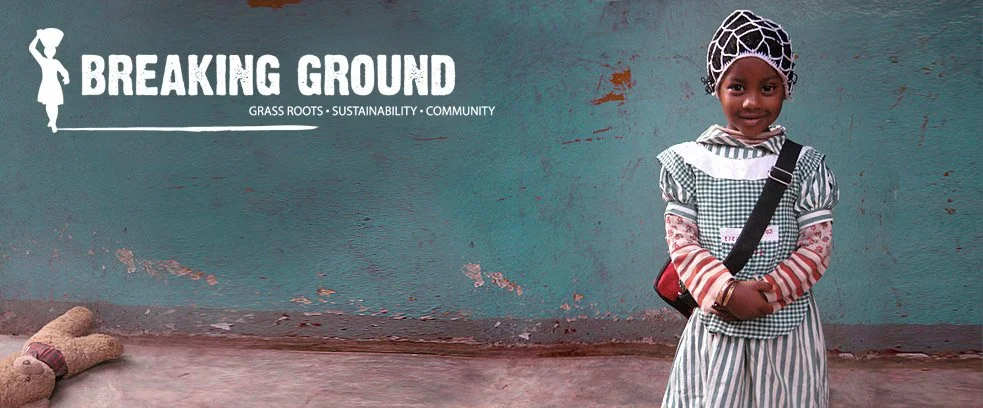
The Global Peace Building Foundation (GPBF) has expanded its global grant portfolio into Cameroon, Africa. GPBF recently issued a $1,000.00 Precision Micro-Grant℠ to its newest grantee, Breaking Ground. Through facilitated intercommunity dialogues in what are called Peace Clubs, Breaking Ground creates a positive space for youth and children of conflicting groups in Cameroon to begin to transform the negative stereotyping, prejudice, hatred and fear of “the other” through constructive dialogue and discussion.
Dating back to the independence period (1958-1960), Anglophone (English-speaking) Cameroonians have felt marginalized and excluded from the economic, political, and cultural spheres in their country. The disruption and instability driven by this conflict has created tens of thousands of Internally Displaced People (IDPs).
One of Breaking Ground’s primary programmatic goals is engaging in intercommunity dialogues and facilitating Peace Clubs to allow IDPs to better integrate into their host communities. These Peace Clubs offer a safe space to facilitate dialogue, particularly between children and youth, about how each member of the community is affected by the ongoing conflicts. Through these discussions, Breaking Ground and their partners help to educate children and youth around non-violence, restorative justice, and peaceful conflict resolution through constructive dialogue. GPBF is excited and honored to support the work of Breaking Ground to bring sustainable peace to the people of Cameroon.
GPBF Grantee, PeacePlayers International, Receives National Award

PeacePlayers International (PPI), a Global Peace Building Foundation (GPBF) grantee, was recently selected a winner of the 2017 Robert Wood Johnson Foundation (RWJF) Sports Award. GPBF is proud to support PPI in their efforts to bridge divides through basketball.
Given to just three organizations yearly, the $7,500 award recognizes honorees for their “innovative and influential approaches to using sports to improve the Culture of Health in their communities.” For more than 40 years, the RWJF has worked to improve health and health care. The Sports Award honors the efforts of PPI to build healthier communities through sport.
The award will help PPI raise awareness as they partner with Nike to expand their programming in the United States (Brooklyn, Baltimore, Detroit), striving towards a world where youth who play together can learn to live together. We congratulate PPI on this honor and look forward to our continued collaboration.
July, 2017

Op-Eds
9/11| Breaking the Cylce: How to Build Sustainable Peace Using the Contact Theory
September 11, 2001, was a tragic day for the entire world and for me personally. My 25-year-old niece, Katie McCloskey, was working on the 97th floor of the World Trade Center when American Airlines Flight 11 struck the North Tower. My high school friend, Ken Waldie, was aboard that jetliner. Both perished that morning. In the following days I began to consider how peace might be achieved if people could begin to see each other as human beings, as opposed to “the scary other” that was being broadcast on every major U.S. news station. Through my research and studies, I discovered the Contact Theory, a central tenet of peace building.
Contact Theory was first developed in the 1950s by renowned researcher Gordon Allport, and is based on the belief that separation and unfamiliarity between conflicting groups can, and often does, breed negative attitudes such as stereotypes and prejudices which can potentially escalate into hostility and violence. Contact Theory posits that these negative attitudes can be reduced by promoting contact and familiarity between the conflicting groups. It emphasizes the development of personal relationships on a more intimate level. Contact Theory works best when it is applied to youth and children’s peace building programs. The change in attitudes and beliefs, which happens in the formative stage of a young person’s life, creates the conditions necessary for youth to form lasting relationships built on mutual trust and respect. Sustainable peace is rooted in relationships that maintain a sense of connectedness, trust, and the ability to communicate in a nonviolent manner.
PeacePlayers International (PPI), Seeds of Peace (SOP) and Dancing Classrooms – Pittsburgh (DCP) are examples of organizations that successfully operate under the principles of Contact Theory.
PPI is a global organization that uses sports to unite and educate young people in divided communities. PPI operates under the premise of “children who play together can learn to live together.” It is a great example that you destroy your enemies by making them your friends. In Northern Ireland, for example, PPI uses the game of basketball to unite, educate and inspire Catholic and Protestant young people. A formal peace accord between the Catholic and Protestants was signed in 1998, but tensions remain. The schools and neighborhoods are highly segregated. Less than seven percent of Northern Ireland’s pupils attend integrated schools. It will likely take many generations to erode these long-standing barriers so that Catholics and Protestants no longer view each other as the “other side.” Since 2001, PPI has successfully offered joint sports training, peace education, and life skills activities to over 65,000 youth from 12 countries.
A significant goal of SOP is to enable their dialog program participants to see the human face of their enemies, and from that experience build relationships based on mutual trust and respect. SOP operates a camp in Otisfield, Maine that serves as its programming foundation. Israeli and Palestinian youth, for example, spend three and a half weeks together in intense dialog and recreational and team building activities. The experience is transformational. Since 1993, more than 5,000 graduates of the program, referred to as “Seeds,” are becoming today’s politicians, journalists, teachers, business leaders, community organizers, and above all, peacemakers.
Respect and compassion are the guiding principles of DCP. DCP uses ballroom dancing as a tool to break down social barriers, teach about honor and respect, treat others carefully, improve self-confidence, communicate and cooperate and accept others even if they are different. Since 2009, more than 3,300 Pittsburgh children in 234 fifth and eighth-grade classrooms have benefited from DCP.
The impact of the PPI, SOP and DCP programs can be seen, both anecdotally and through independent studies. PPI, for example, has completed the first year of a three-year Randomized Control Trial (RCT) led by New York University Researchers and funded by USAID and the United States Institute of Peace. Initial data is showing that intergroup attitudes of participants are improving significantly as a result of participation in the program. The longer the participant had been in the program, the greater the improvement in attitudes. SOP conducted a similar study through the University of Chicago that has shown similar results. DCP research findings indicate significant improvement regarding student’s perception of social support, diversity interaction, self-worth, and school success.
The process of peace building is complex. Attitudinal change is just one component in this process. It requires a long-term commitment with the realization that it may take many generations to undo the hatred, fears, and violence that have been passed down from one generation to the next. The aim of using Contact Theory is to break the cycle, and by doing so, contribute to the building of the sustainable peace all children deserve.
Published in:
The Peace Worker
http://peaceworker.org/2015/10/breaking-the-cycle-how-to-build-sustainable-peace-using-contact-theory/
Rise Up Times
http://riseuptimes.org/2015/09/11/911-breaking-the-cycle-how-to-build-sustainable-peace-using-the-contact-theo/
Truth Out
http://www.truth-out.org/speakout/item/33147-breaking-the-cycle-how-to-build-sustainable-peace-using-contact-theory
Alliance for Peacebuilding
http://www.allianceforpeacebuilding.org/2015/10/911-breaking-the-cycle-how-to-build-sustainable-peace-using-the-contact-theory/
Gilmer Free Press http://www.gilmerfreepress.net/index.php/fpopin/breaking_the_cycle_how_to_build_sustainable_peace_using_the_contact_theory/
Publish Dates: September 11, October 2,7,2015

PHOTO; MIKE DEXTER/SHUTTERSTOCK
This article Tom Etzel co-authored was published in Inside Philanthropy on July 10, 2018.
We are two philanthropists who share a commitment to building a more peaceful world. We do this by making grants to organizations that focus on peace, violence prevention, and social inclusion. Recent articles in Inside Philanthropy and The Nation have explored why more funders don’t support peace and security work. And a 2017 Forbes list of $25 million-plus gifts for social challenges did not cite a single peace-oriented gift. We are proud of our support for peace efforts, but we realize that the peacebuilding field has a way to go before it can secure more significant amounts of funding. We believe that our experience as funders, specifically funders with a for-profit, private sector background, can be instructive.
The foundation that Tom created on September 11, 2010, the Global Peace Building Foundation (GPBF), seeks to build peace by supporting organizations and projects that restore, rebuild and transform relationships that have been broken due to stereotyping, hatred and fear that have accumulated over generations. “Micro-grants” are made to select organizations in the range of $500. Milt orients his giving to the Purdue Peace Project, which reduces the likelihood of political violence and contributes to lasting peace in West Africa and Central America. He also funds research that stimulates the creation of new knowledge, information and data that can help donors make decisions about what to fund. Both of us prioritize actions and solutions driven by people within conflict-affected communities. And we have both observed positive impact resulting from our philanthropy.
Tom’s philanthropic giving was motivated by the loss of both his niece and a close friend on September 11, 2001. For Milt, becoming a retiree created an opportunity to give back, specifically by reflecting on the ongoing war and conflict in the world and asking, “What can I do to reduce the terrible human and economic cost of armed conflict?” Though we came to our current peacebuilding / violence prevention philanthropy for different reasons, and we give at different levels, we draw on our private sector background to inform our giving. Increasingly, we’ve realized that this particular framework often sets us apart from other donors in the peacebuilding field.
When the GPBF considers where to make its micro-grants, it closely sticks to the eligibility criteria it established early on: organizations focused on youth and children that employ an approach known as the contact theory. The contact theory holds that negative attitudes can be reduced by promoting contact and familiarity between conflicting groups. Once those criteria are met, the GPBF looks for organizations that have financial reporting systems in place and an ongoing plan for monitoring and evaluating the effectiveness of their programs. GPBF recognizes that quantitative data is often challenging for grantees to secure, so it looks for qualitative indicators that the attitudes and perceptions of the youth and children are changing in a positive way. When it comes to expectations around reporting, GPBF is flexible, but does expect the grantee reporting to get more sophisticated as their revenues grow and they are able to invest more resources in reporting systems.
Milt Lauenstein’s giving is at a larger scale (approximately $500,000 each year), and as an individual donor, he can act with a great deal of flexibility. However, like the GPBF, expected results are a key determining factor. Milt says: “I talk to potential grantees and partners. I look for determination to achieve results at minimum cost. I assess their interest in, and capacity to, measure results and costs.”
His approach about what to fund is based on his best judgement about the cost-effectiveness of the potential grantee work and the value of results to society. Milt’s firm belief in the importance of cost-effectiveness as a metric has led him to dedicate an area of his giving to the development of more cost-effectiveness research. Milt is currently funding several research projects on peacebuilding cost-effectiveness. Similar to the GPBF, Milt invests a good deal of time in getting to know potential grantees and building relationships with them. And although Milt doesn’t have a lot of formal grant requirements, performance against budget is a key factor.
We know that businesses make spending decisions based on what gives the most bang for the buck. In the peacebuilding field, that gets much less attention; little has been done to determine where money and effort can do the most good. The unfortunate result is that donors and practitioners possess less than an ideal amount of evidence on which to base decisions about where to spend their effort. We’d like to see peacebuilding organizations focus on measurable results at a minimum cost, consider cost-effectiveness in their work, use data to make decisions, and adjust accordingly.
Decades ago, there was a mentality of “us versus them” regarding the for-profit and not-for-profit sectors. Mindsets and values were perceived to be drastically different in each group, there was skepticism, and little room for collaboration. Thankfully, that has changed. Public/private partnerships are commonplace, corporate social responsibility is sophisticated and genuine, social impact investing is trending, and many more nonprofits are adopting a strategic and quantitative mindset to ensure the success of their mission. Let’s build on this to foster learning that can happen between the for-profit world and our particular, small slice of philanthropic giving: peacebuilding. We believe that this kind of openness and learning will increase the chances that (1) corporate philanthropists (and others) will recognize the potentially positive role they can play in building peace, and (2) they will step up to support peacebuilding efforts.
We also think it’s time that companies who have been supporting education, poverty alleviation, and sustainability programs through their philanthropy take on peacebuilding as a new cause. Investing in peacebuilding initiatives is certainly the right thing to do, but making and preserving sustainable peace also provides opportunities for investment, for sales, and for developing sources of supply.
Without peace, doing business is difficult, often impossible. And without sound financial management, focus on results, and cost-effectiveness, peacebuilding organizations will struggle to achieve their worthy goal. As we continue to support initiatives within the peacebuilding field, we’ll encourage the field to adopt a more rigorous approach to cost, effectiveness and return on investment. We think this is key to drawing in more funding for peace, which the field (and the world) desperately needs.
***
Tom Etzel, based in Pittsburgh, is a Certified Public Accountant and Investment Advisor with four decades of experience. September 11, 2001, was the major catalyst in Tom Etzel's commitment to peacebuilding, propelling him to pursue a Master of Arts in International Relations from the Fletcher School of Law and Diplomacy (Tufts University) and to establish GPBF in 2010.
Milt Lauenstein is a chemical engineer by training and has an MBA from the University of Chicago. Retired for approximately 20 years, he has served as CEO, president, or chairman of several successful corporations, as a director of over a dozen corporations, and as a management consultant. He co-founded the Purdue Peace Project in 2011 at his alma-mater, Purdue University, based on a test case of locally led peacebuilding that he had funded earlier.
Both authors are members of the Peace and Security Funders Group.